Snowmobiling is one of the most exhilarating ways to experience winter. Whether you are a seasoned enthusiast or a curious beginner, this guide brings together everything you need to know to plan your snow adventures: types of machines, trails, must-visit regions, equipment, safety rules, and practical resources. Here is your starting point for an unforgettable winter experience.
Key Takeaways
- Snowmobiling is a unique way to explore winter in North America, from Québec to the Côte-Nord, through Ontario, the Atlantic provinces, and the northern states of the U.S.
- Québec boasts over 32,000 km of groomed snowmobile trails - the largest network in the world - managed by more than 190 clubs and thousands of volunteers.
- There are several major types of snowmobiles: trail, backcountry, multi-segment, utility, and youth models. Popular ranges like Ski-Doo from BRP cover all these categories.
- Safety is at the heart of the practice: permits, insurance, approved helmets, adherence to trail rules, and responsible driving are essential.
- This article also covers maps, mobile apps, key regions, and good environmental practices to fully enjoy each outing.
Introduction to Snowmobiling
A snowmobile is a motorized vehicle designed to travel on snow and ice, equipped with two skis at the front for steering and a track at the rear for traction. The engine can be two-stroke or four-stroke, and modern snowmobiles often use continuously variable transmissions (CVT) for smooth handling. Driving a snowmobile requires good technique and adherence to the rules, but the sport remains accessible to all levels.
Here are the key points to understand the world of snowmobiling:
- North American origins: the development of the snowmobile dates back to the 1950s-1960s, with pioneers Joseph-Armand Bombardier and Carl Eliason. The recreational boom truly began in the 1970s.
- Triple purpose: snowmobiling is now both a leisure activity (trails, powder, excursions), a means of transport in isolated northern regions, and a work tool (trapping, resupply, patrol).
- Diverse practices: we distinguish between trail riding on groomed trails, guided outings with included equipment, and off-trail riding in untracked terrain - each style offering a different experience.
Snowmobiling in North America
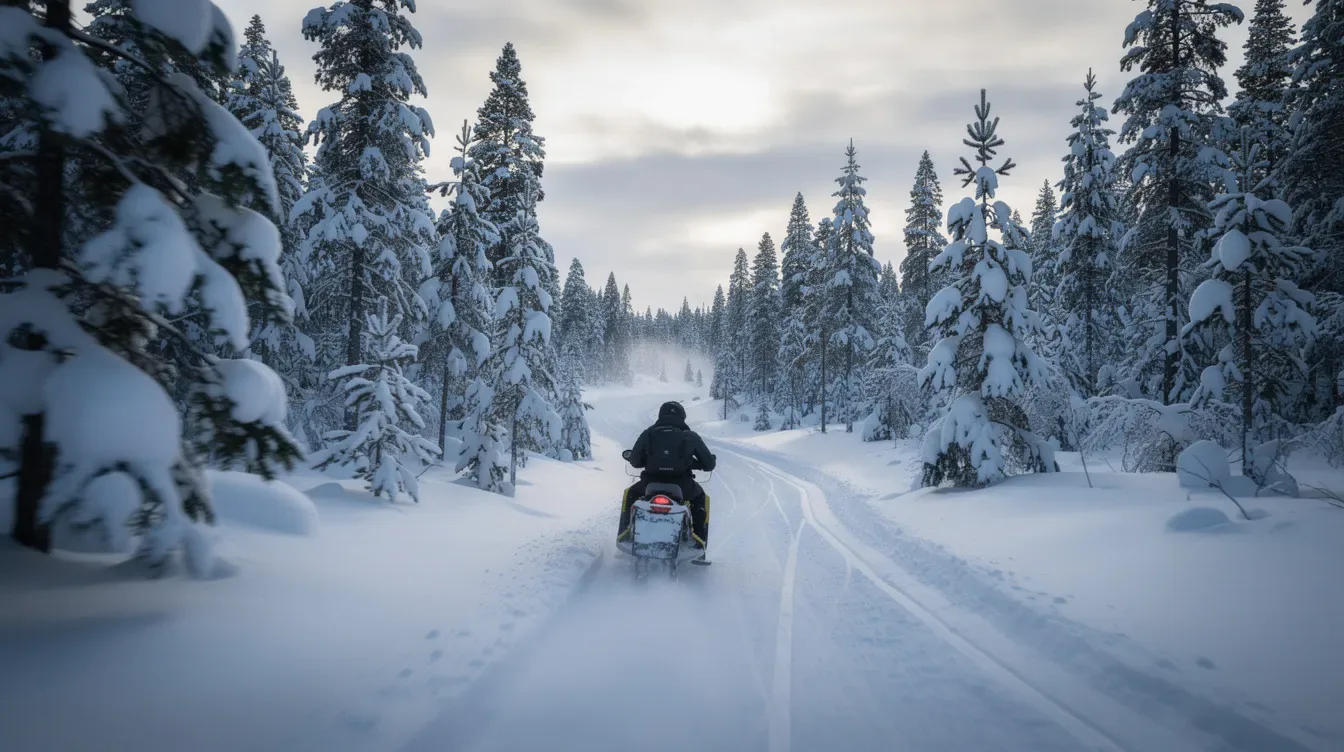
North America is the global birthplace of snowmobiling, and the continent offers varied riding conditions from one end to the other.
- Major riding hubs: Québec dominates with the density and quality of its network, followed by Ontario, the Atlantic provinces, Western Canada (British Columbia, Alberta), and northern U.S. states like Maine, Michigan, Montana, and Minnesota.
- A world reference network: Québec has over 32,000 km of interconnected groomed trails, managed by the FCMQ and its member clubs. This network allows snowmobilers to traverse entire regions, with lodges, gas stations, and accommodations accessible directly from the trail.
- Typical season: the season generally runs from December to late March, sometimes extending into April in more northern or elevated areas. Stable snow cover (at least 20-30 cm) is necessary for trail openings.
- Economic impact: winter tourism, snowmobile rentals, accommodations, events, and snowmobiling festivals - the sport generates considerable economic activity in the regions involved. The Québec network attracts snowmobilers from all over the world, including from abroad.
Major Types of Snowmobiles
Choosing the right snowmobile depends on your riding style, the terrain you aim for, and your level. Here are the main categories and their characteristics:
- Trail snowmobiles: trail snowmobiles offer performance and comfort over long distances. Short track, wide ski stance, optimized suspensions for compacted surfaces. Ideal for loop rides on groomed networks.
- Backcountry snowmobiles: backcountry snowmobiles are designed for technical terrains - deep powder, steep slopes, dense forests. They have a longer track (146 to 175 inches), high studs to float in the snow, and a narrow ski stance for easy turning. More physically demanding, they provide a strong dose of adrenaline.
- Multi-segment snowmobiles: multi-segment snowmobiles combine performance on trails and off-trail. They are an excellent compromise for snowmobilers who enjoy varying their outings and conditions.
- Utility snowmobiles: utility snowmobiles are suited for tough winter tasks - towing, transporting gear, accessing cabins or hunting camps. Robust, they prioritize load capacity and reliability over lightness.
- Youth models: small-displacement machines, such as youth models like the MXZ 120, are designed for new riders. They allow for supervised and gradual learning, usually under adult supervision.
Focus on Ski-Doo Snowmobiles
Ski-Doo, the iconic brand of BRP (Bombardier Recreational Products), is one of the key references in the world of snowmobiling. Highly present on the trails of Québec and throughout North America, the brand offers an inventory covering all segments.
- Trail: the Renegade and MXZ ranges offer maneuverability, comfort, and precision on groomed trails - perfect for long rides.
- Off-trail / powder: the Summit and Freeride models target deep snow and slope enthusiasts, with long tracks, powerful Rotax engines, and optimized weight. The 2026 Ski-Doo models feature weight reductions of up to 6-7 kg on certain versions.
- Multi-segment and expedition: the Backcountry and Expedition ranges are suitable for those who want to alternate between trail and off-trail, or embark on multi-day expeditions.
- Utility: the Skandic and Tundra are designed for work - towing, accessing remote areas, transporting gear.
- Youth: the MXZ 120 and 200 allow for safe family initiation.
To choose from the range, assess your riding style (long-distance touring, powder, work, initiation), try the riding position, and check options like electric start, heated grips, and engine power.
Snowmobile Trails: Operation and Access
Understanding how trails operate is essential to fully enjoy each snowmobiling outing.
- What is a groomed trail? An official route with specific signage, mechanically maintained by groomers, secured, and managed by local clubs. Each trail is opened or closed based on snow conditions.
- The Québec network: with over 32,000 km of interconnected trails, Québec offers the largest snowmobile trail network in the world. More than 200,000 snowmobiles are registered there.
- The role of clubs and volunteers: about 190 clubs and around 4,500 volunteers ensure trail marking, surface maintenance, management of bridges, heated lodges, and local information. These members are the backbone of the network.
- Access to maps: paper and digital maps are available from clubs, provincial associations, corporate partners, and permit sales points.
- Respect for right of way: it is absolutely essential to stay on authorized trails to respect the rights of private property owners and protect the environment. Riding off the marked corridor on private land can lead to loss of access for all snowmobilers.
Key Regions for Snowmobiling in Québec
Québec is divided into several major snowmobiling zones, each with its landscapes, character, and strengths.
- Laurentides: close to Montreal, the Laurentides offer trails for all levels of snowmobilers, from beginners looking for their first experience to seasoned riders.
- Mauricie: Mauricie has 1,955 km of snowmobile trails through dense forests and snowy valleys. A popular spot for weekend getaways.
- Charlevoix: spectacular mountainous landscapes, hotels and inns accessible by snowmobile, warm atmosphere in village lodges.
- Saguenay–Lac-Saint-Jean: the Saguenay-Lac-Saint-Jean region has over 3,800 km of trails, an immense territory bordered by boreal forests and frozen lakes.
- Gaspésie: Gaspésie offers circuits with views of the Rocher Percé and breathtaking coastal panoramas.
- Côte-Nord, Abitibi-Témiscamingue, Bas-Saint-Laurent, Eastern Townships, Centre-du-Québec: each region offers its own trees, mountains, banks of the St. Lawrence River, and northern villages.
The interconnected network allows for multi-day raids with accommodations directly accessible by snowmobile, turning each route into a true expedition.
The Côte-Nord: A Unique Snowmobiling Playground
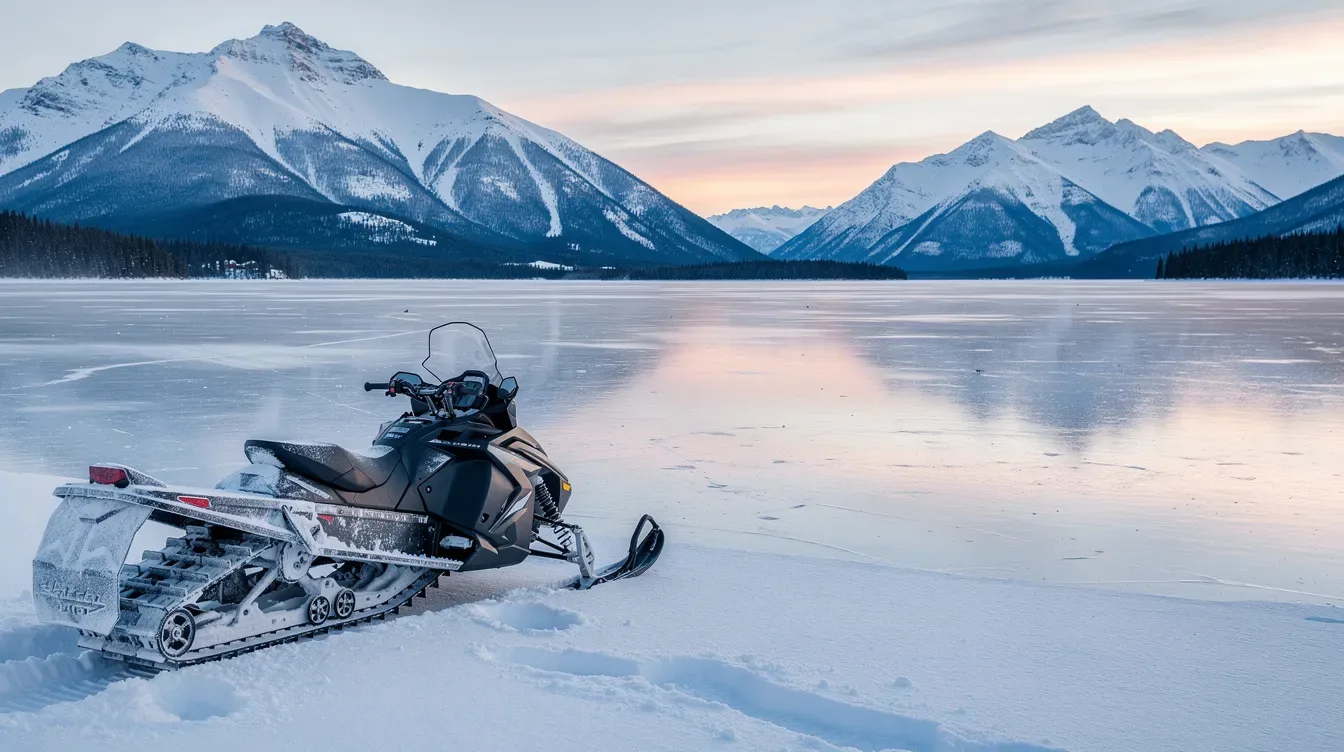
The Côte-Nord is a unique territory in the world of snowmobiling. A long wild strip stretching along the St. Lawrence and the Gulf, it stands out for its vastness, low population density, and endless landscapes.
- Geography: boreal forests, mountains, spectacular rivers, and direct access to the riverbank. The perfect place for those seeking adventure at the end of the world.
- Why the Côte-Nord is popular: long distances possible, abundant snow, and a season often longer due to altitude and wind exposure. Conditions remain excellent later in the season than in more southern regions.
- Multi-day excursions: interregional trails run along the Côte-Nord and offer opportunities for multi-day rides, with accommodations in lodges, inns, and hotels accessible directly by snowmobile.
- Points of interest: grand coastal panoramas, spectacular bridges spanning rivers or reservoirs, welcoming villages where snowmobilers are received like friends.
The Côte-Nord embodies the ultimate northern getaway: silence, vastness, and powder at your fingertips.
Preparing for Your Snowmobiling Trip
Good preparation makes all the difference between a memorable outing and a misadventure.
- Plan your itinerary: calculate a realistic daily distance, locate gas points, lodges, and accommodations accessible via the trails. A well-thought-out loop will help you avoid unpleasant surprises.
- Check trail conditions: consult official websites, interactive maps, or the iMotoneige mobile app before departure. Snow conditions can affect snowmobiling safety; a closed trail should never be used.
- Book early: during peak winter season, accommodations in popular regions (Charlevoix, Saguenay, Gaspésie, Côte-Nord) fill up quickly.
- Inspect your machine: check the brakes and headlights before heading out on your snowmobile. Also, check the oil, track, belt, and lighting. If renting, choose a reputable rental company with well-maintained units.
- Have a backup plan: thaw, storms, or strong winds at altitude can disrupt your plans. Keep flexibility in your schedule and plan alternative areas.
Essential Equipment and Clothing
The North American winter does not forgive unpreparedness. Here is the list of essentials:
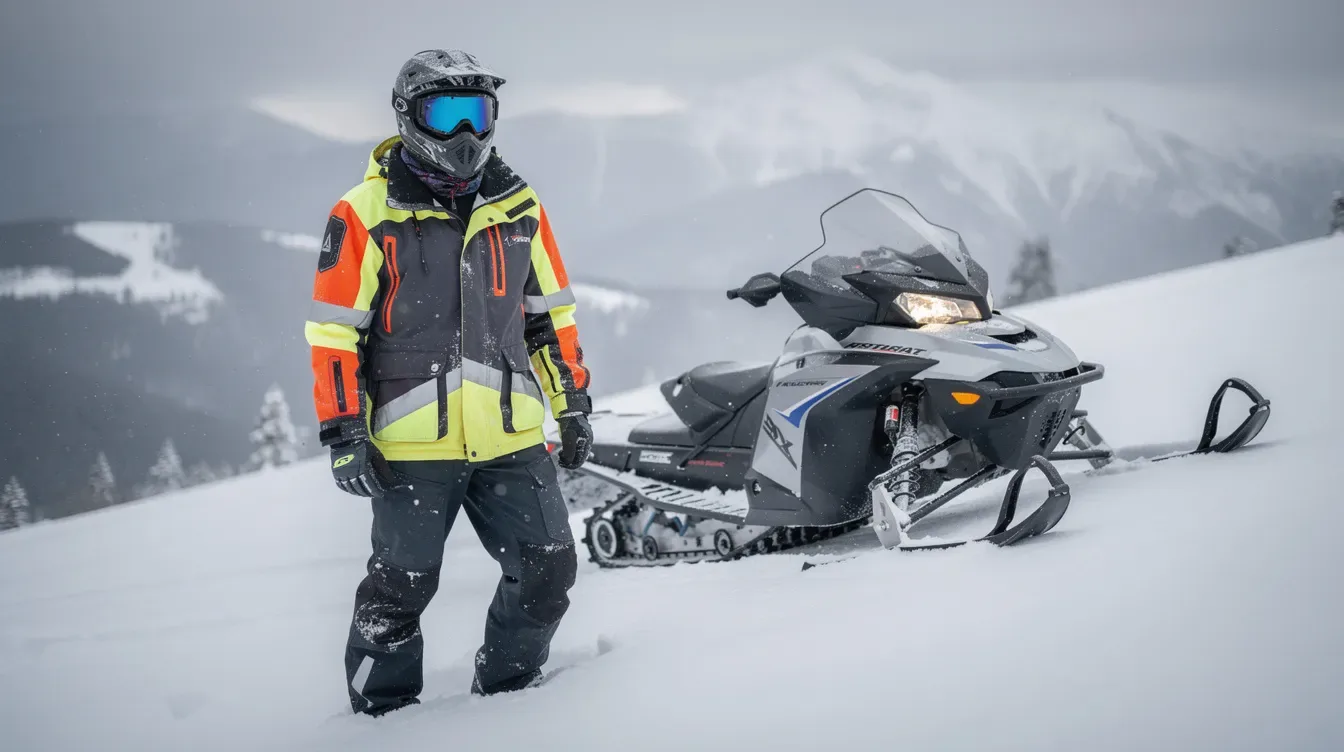
- Layers of clothing: moisture-wicking technical underwear, insulating layer (wool or synthetic), waterproof and windproof outer shell designed for snowmobiling.
- Helmet: it is essential to wear an approved helmet while driving a snowmobile - full-face or modular, with a visor suitable for cold (anti-fog or heated).
- Extremities: insulated gloves, warm and waterproof boots, balaclava. On very bright days, a tinted visor or goggles protect your vision.
- Safety: first aid kit, emergency blanket, basic tools, spare belt, rope or strap, small gas can if the trip justifies it. Having all this at your fingertips can make a difference.
- Communication: a charged phone, ideally complemented by a distress beacon or a geolocation device in remote areas. In some parts of the Côte-Nord or interior Québec, cell coverage is nonexistent.
Rules, Permits, and Safety on the Trails
Snowmobiling is governed by strict rules, comparable to those of driving a car on the road network. Ignoring them exposes you to fines, accidents, and loss of your access rights.
- Permits and access: most jurisdictions require a permit or access fee for trails, often sold for the season or by the day. In Québec, a valid driver's license is required from age 16, with a competency certificate mandatory for those aged 16-17. Required documents include a permit and proof of liability insurance (minimum $1,000,000 in Québec).
- Speed: snowmobiles can reach a maximum speed of 70 km/h on trails, but must travel at 30 km/h within 30 meters of a residence. Respect the signage.
- Alcohol and drugs: the consumption of alcohol and drugs is prohibited while operating a snowmobile. There is zero tolerance for drivers under 22 years old in Québec.
- Frozen water bodies: frozen lakes and rivers can be dangerous if the ice thickness is not verified. Never cross without official confirmation of sufficient thickness.
- Safety tips: ride in groups, maintain a safe distance between vehicles, adjust your speed to visibility and conditions, announce your intentions to other users. Caution is essential both in straightaways and turns.
Maps, Apps, and Navigation Tools
Modern navigation has transformed the way to plan and experience snowmobiling outings.
- Paper maps: they remain a reliable source for an overview and as a backup solution without battery. Available from clubs and associations.
- Online interactive maps: snowmobiling federations and associations offer maps showing trails, lodges, gas stations, accommodations, and real-time trail conditions.
- Mobile app: dedicated apps like iMotoneige provide GPS navigation on trails, offline map downloads, and trail status displays. Essential for tracking the opening and closing of sections.
- Areas without coverage: always download maps before departure in areas with limited cell coverage - some portions of the Côte-Nord or interior Québec have no signal.
- Common sense: combine digital tools with judgment. Check the weather, inform a friend of your itinerary, allow for time and gas margins. A quick search before departure avoids many hassles.
The Snowmobiling Experience: Tourism, Raids, and Complementary Activities
Beyond the sport, snowmobiling opens the door to unique winter experiences.
- Guided tours: ideal for beginners, they include a professional guide, snowmobile rental, fuel, and basic equipment. A half-day is enough for a first try.
- Multi-day raids: from region to region, with accommodations in outfitters, inns, or hotels accessible directly by trails. Québec excels in this type of adventure thanks to its interconnected network.
- Complementary activities: winter wildlife observation, ice fishing, dog sledding, Nordic spas, local cuisine in lodges and village restaurants. These activities enrich each day.
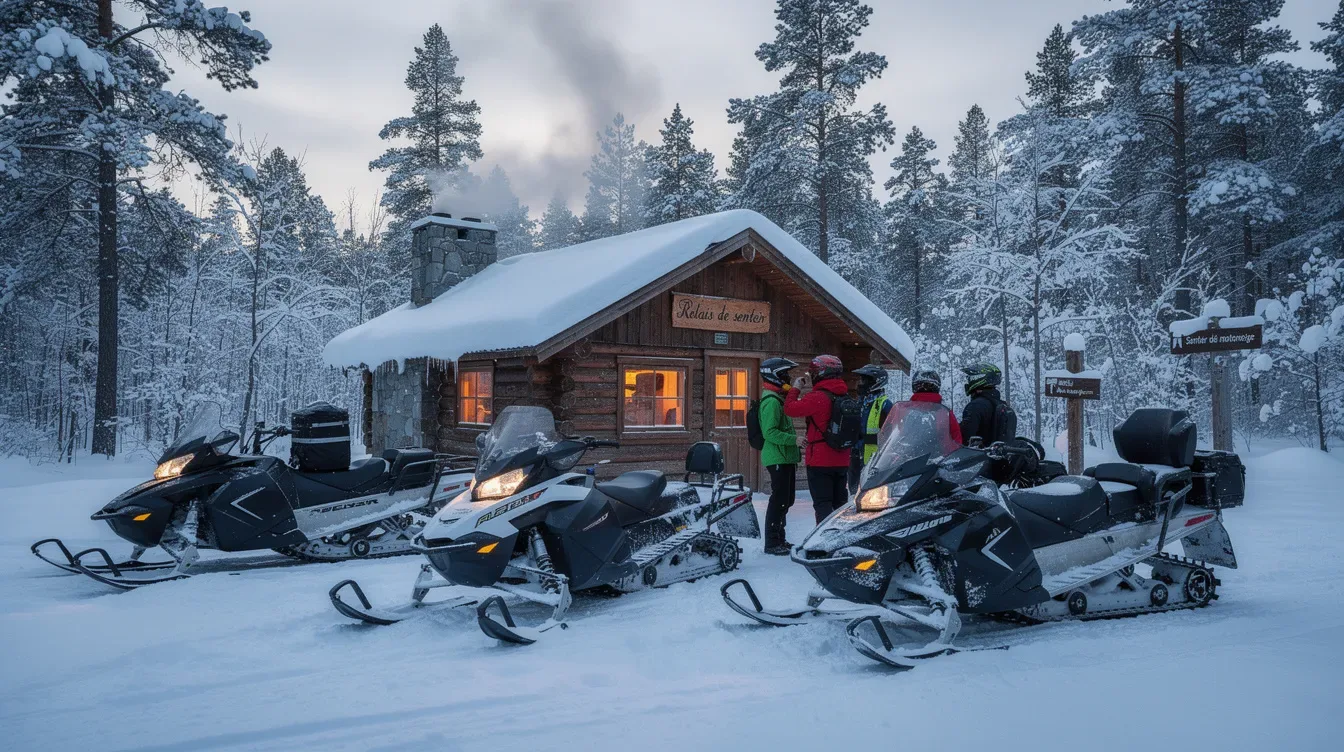
- Lodge atmosphere: hot meals, gatherings among snowmobilers, sharing itineraries and tips - lodges are the social heart of the network. They embody the camaraderie spirit inherent to the sport.
- Optimal periods: January to early March generally offers the best conditions - solid snow cover, stable temperatures, widely open network, and peak tourist activity.
Environment and Responsible Good Practices
Enjoying snowmobiling also involves preserving northern environments for future generations.
- Stay on authorized trails: riding off-trail in unauthorized areas damages wildlife habitats, young forests, and wetlands. Respecting temporary closures is a duty.
- Fragile areas: avoid peat bogs, shorelines, and sensitive wildlife areas. These ecosystems take years to regenerate.
- Noise and emissions reduction: regularly maintain your snowmobile, prefer more efficient engines (4-stroke, optimized calibrations), and adopt smooth driving.
- Waste management: leave nothing in nature. Take your trash back to collection points at lodges or villages. A small gesture that makes all the difference.
- Support local clubs: membership, volunteering, participating in maintenance days - every contribution strengthens the sustainability of snowmobile trails and the colossal work of local partners.
Frequently Asked Questions (FAQ)
Here are the answers to the most frequently asked questions to clear your last doubts before planning your next outing.
At what age can you drive a snowmobile?
The minimum age varies by province or state. In Québec, you must be at least 16 years old and hold a valid driver's license or a competency certificate. In Ontario, a specific permit (MSVOL) allows youth aged 12 to 15 to ride on certain trails. Below the legal age, children can use youth snowmobiles under supervision, on private land or supervised circuits. Always check local regulations before any outing with minors.
How much does a snowmobiling trip for beginners cost?
An initiation package including rental, fuel, guide, and basic equipment typically costs between $150 and $400 per person for half a day, and between $300 and $700 for a full day - taxes extra. Prices vary by region, proximity to major centers, tourist popularity, and service level (group or private). Compare several offers and check what is included: insurance, deductible, security deposit, clothing, fuel.
Can you snowmobile without prior experience?
Absolutely. Most tour operators offer initiation sessions suitable for complete beginners. The typical course includes basic training on how to operate the snowmobile, safety rules, a trial on a small loop, and then an easy guided ride on wide, non-technical trails. It is recommended to practice low-speed driving for beginners and to listen carefully to the guide's instructions. A half-day is enough to gain confidence.
What is the best time to snowmobile in Québec?
The season generally runs from December to late March, sometimes into April in more northern or elevated regions. January and February usually offer the most reliable conditions: stable cold, good snow depth, widely open network. Always check trail conditions and the weather a few days before departure, especially at the beginning and end of the season, as conditions vary from region to region.
Do you need to own your own snowmobile to enjoy the trails?
No. Many centers rent ready-to-ride machines, with all-inclusive packages. Renting is ideal for a first try or for occasional enthusiasts, without assuming the costs of maintenance, storage, and annual taxes. However, if you ride regularly or return each season to the same region, buying a snowmobile becomes more interesting in the long run - especially since the Québec network justifies a sustainable investment in this sport.