Key Points to Remember
- Weight, skill level, and preferred terrain (groomed runs, park, powder, all-mountain) are the three criteria that determine the choice of a snowboard—well before color or brand.
- There are several main types of snowboards: freestyle, freeride, carving, all-mountain, powder, and splitboards. The types of boards are classified according to the discipline and terrain targeted.
- Size, flex, and camber profile directly influence your progression, enjoyment, and safety on the mountain.
- Choosing a first snowboard is crucial for rapid progression: an ill-suited board hinders learning and increases the risk of falls.
- After these few guidelines, the rest of the article details how to find the ideal board for this winter 2026–2027, from flex to budget to maintenance.
Introduction: Why Choose Your Snowboard Wisely in 2026
Snowboarding continues to attract enthusiasts in Quebec, France, and Switzerland. Whether in the Laurentians, the Alps, or the Pyrenees, the diversity of current snowboards— all-mountain, park, powder, touring—has never been broader. And with it, the difficulty of navigating the purchase process.
Recent technologies have transformed the market. Hybrid profiles, lightweight paulownia or bamboo cores, carbon reinforcements, high-end sintered bases: it is now possible to tailor the board to the riding style with a precision that didn't exist five years ago. Renting a board before buying is also recommended for beginners, allowing them to test various configurations without commitment. And regardless of your level, wearing a helmet while learning to snowboard is essential—it's a non-negotiable safety issue.
Choosing randomly often leads to a board that is too stiff, too long, or too technical, which hinders progression. This guide reviews technical concepts (flex, profile, shape), concrete criteria (level, size, terrain, budget), and practical equipment and maintenance tips to help you make the right choice.
Understanding Flex: The Personality of Your Snowboard
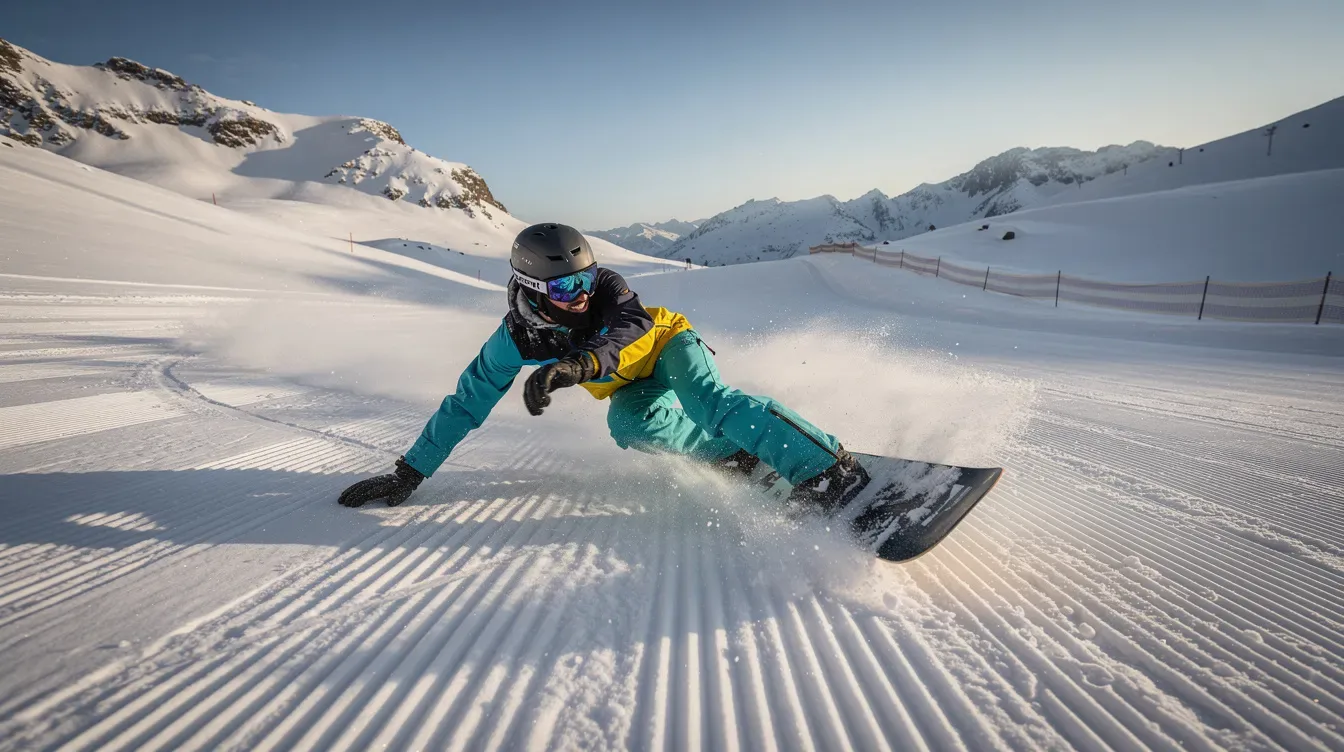
Flex refers to the board's flexibility along two axes: longitudinal flex (from the tip to the tail, which determines the ability to press, rebound, and float) and torsional stiffness (edge to edge, which controls edge grip in turns and stability at high speeds). Together, these two dimensions condition your board's behavior on hard snow, in the park, and in powder.
The flex of a board is rated from 1 (soft) to 10 (stiff). Here’s how to read this flex scale in 2026:
- 1 to 3 (soft): ideal for beginners, freestyle, and jibbing. Tolerant, playful, easy to press and deform.
- 4 to 6 (medium): the territory of all-mountain and all-terrain. A good compromise between comfort, versatility, and performance.
- 7 to 10 (stiff): carving, aggressive freeride, high speed. Ultra-fast response, maximum stability, but requires solid technique and causes quicker fatigue.
A concrete example: a 70 kg rider who is a beginner will be comfortable with a flex around 3–4, on a moderately sized board with a forgiving profile. An experienced rider of the same weight, who enjoys aggressive carving on icy slopes, will aim for a flex of 7–8 on a cambered, directional board.
If you are torn between two stiffnesses, favor the softer one. You will maintain comfort, and your confidence will grow faster on the snow.
Board Profile: Camber, Rocker, and Hybrids
The camber profile significantly influences a board's behavior. Here are the three main families to know:
- Classic camber: the board is arched between the contact points at rest. This profile offers strong edge support, remarkable precision, and stability on hard snow. Highly appreciated for carving and advanced riders, it is less forgiving of edge mistakes.
- Rocker (reverse camber): the tips are raised, and the curvature is inverted. Turn initiation is easier, float in powder is improved, and the board is more forgiving of edge mistakes. However, grip on ice or hard snow remains limited.
- Hybrid profiles: this is the dominant trend in 2026. Camber underfoot combined with rocker at the tips (or vice versa), these profiles offer both grip, tolerance, and all-terrain versatility. Some manufacturers also offer flat-rocker or multi-camber profiles for targeting specific uses.
A typical example: a hybrid board with camber under the bindings and rocker at the nose is perfect for the intermediate rider who wants to do it all—groomed runs, sidecountry, and light powder. A full camber profile, on the other hand, is more suited for the expert rider seeking pure performance in carving.
For a first purchase, hybrid all-mountain profiles are often the best compromise between immediate enjoyment and room for progression.
Board Shape: Twin, Directional, and Derivatives
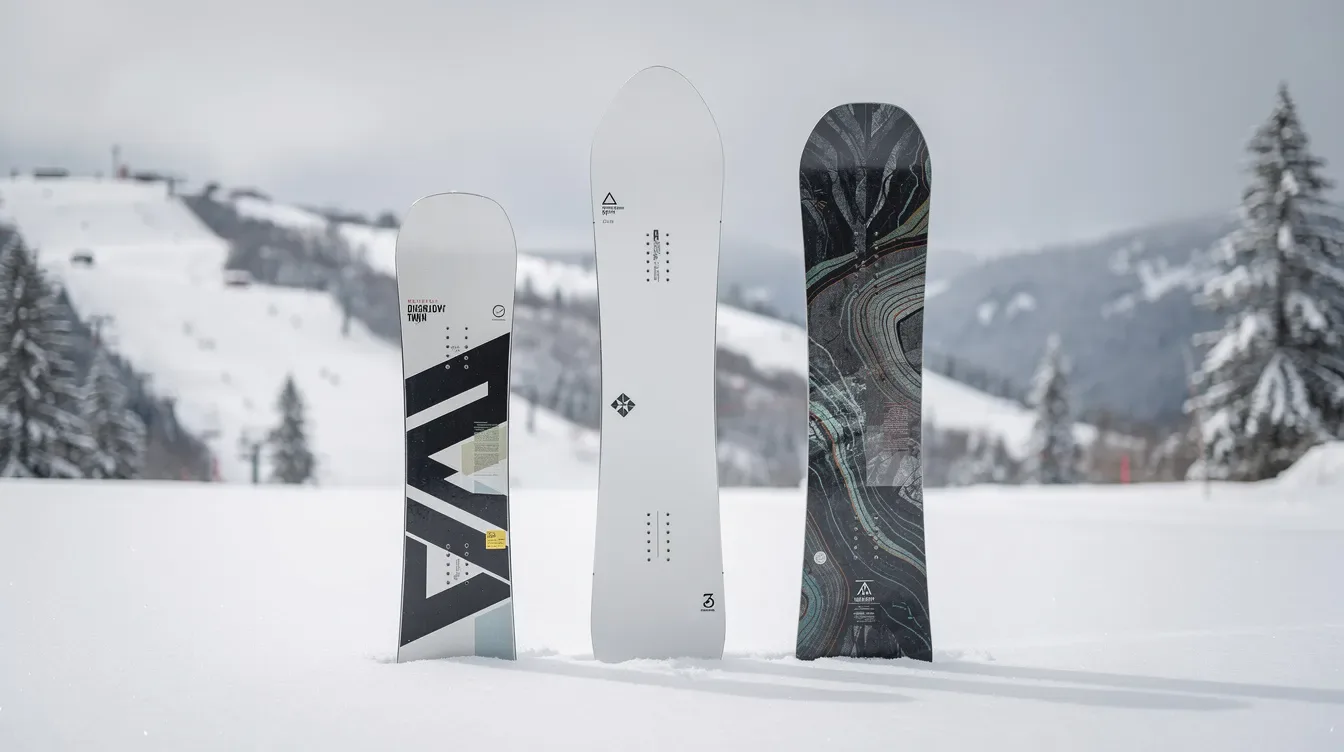
The shape viewed from above (outline) determines the ease of riding switch, float in deep snow, and stability at high speeds. Directional Twin and True Twin shapes are recommended for learning to descend, as they offer a good balance between tolerance and maneuverability.
- True twin: symmetrical tip and tail, centered inserts, identical flex on both sides. Ideal for the park, rotations, switch riding, and riders who want to play all over the mountain.
- Directional: longer and wider nose, shorter and stiffer tail, set back inserts. Perfect for powder, groomed runs, and freeride, it enhances float and stability at high speeds.
- Directional twin: almost symmetrical shape but with a slight setback or slightly differentiated flex between nose and tail. Very common on modern all-mountain boards according to Jones Snowboards guides, it allows for occasional switch riding while favoring classic descent.
- Volume shifted and asymmetrical: shorter and wider boards, sometimes with a widened nose or a narrowed tail. Advantages in powder (increased float) and carving on the backside edge. More demanding in terms of compatibility with boots and stance.
In summary: twin for freestyle and beginners who want to learn switch, directional twin or directional for all-mountain, freeride, and powder.
Sidecut and Turn Radius
The sidecut refers to the curvature of the edges viewed from above. It determines the turn radius, expressed in meters on the technical specifications of snowboards. The more pronounced the curve, the shorter the radius and the tighter the turns.
- Short radius (6–7 m for an average length): tight turns, quick edge changes, perfect for tree runs, narrow trails, and the park.
- Long radius (8–10 m and more): wide arcs, stability at high speeds, suitable for carving enthusiasts on large groomed runs.
Some manufacturers offer multi-radius sidecuts (progressive, bi-radial, quadratic). The idea: a smooth turn entry thanks to a wider radius at the beginning of the curve, then firm grip at the end of the turn with a tighter radius. Ride Snowboards calls this "quadratic sidecut"—other brands use different terms for a similar principle.
For a versatile rider exploring the entire mountain, aiming for an intermediate radius around 7.5–8 m offers a good compromise between maneuverability and stability.
Types of Bases: Extruded or Sintered
The base, made of P-tex, is the part in direct contact with the snow. Its quality directly affects glide, shock resistance, and the durability of your board.
- Extruded base: less expensive to manufacture, easy maintenance, easy repair. Decent speed, but lower ability to heat up (accumulate friction heat) and absorb wax. Sufficient for recreational use or a beginner rider.
- Sintered base: denser and more porous material. Sintered bases absorb more wax for better glide, especially in cold temperatures and dry snow. Sintered bases are faster and more durable but require regular waxing and more expensive repairs.
In 2026, many mid-range and high-end all-mountain boards are equipped with sintered bases, sometimes enhanced with graphite additives to reduce friction at low temperatures, according to the latest tests from Outdoor Gear Lab.
For a beginner or a casual rider, an extruded base may suffice. For a passionate rider who frequently rides and loves speed, a sintered base makes a real difference once the snow is cold and groomed.
The Main Types of Snowboards According to Riding Style
There are several main types of snowboards designed around riding style rather than gender or marketing mode. Here’s a selection of essential categories.
All-Mountain Board
The All-Mountain board is versatile and performs well on all types of terrain. All-mountain boards are suitable for all skill levels. Medium flex, hybrid profile, directional twin or directional shape: it’s the top choice for groomed runs, sidecountry, a bit of park, and occasional powder. All-mountain boards offer medium flex, making them an excellent first investment.
Freestyle Board / Park & Rails
Freestyle boards have a soft to medium flex, a true twin shape, and often a rocker or hybrid profile. Freestyle boards are often shorter for maneuverability, oriented towards jumps, jibbing, modules, and playful riding at low to medium speeds.
Freeride Board
Freeride boards are generally stiffer, directional, or volume shifted, sometimes with a pronounced setback. Freeride boards are designed for off-piste and deep snow, steep slopes, and aggressive turns on ungroomed snow.
Carving Board / Pure Groomed
Alpine boards are designed for speed and carving on groomed runs. Marked camber, pronounced sidecut, stiff flex: they cater to those who enjoy sharp turns on hard snow. Less versatile for switch or park riding.
Powder Board
Powder boards are shaped to float in fresh snow. Powder boards have a wide and raised nose, a narrow tail, a pronounced rocker at the nose, and a significant setback. Very directional shape, ideal for big snow days.
Splitboards
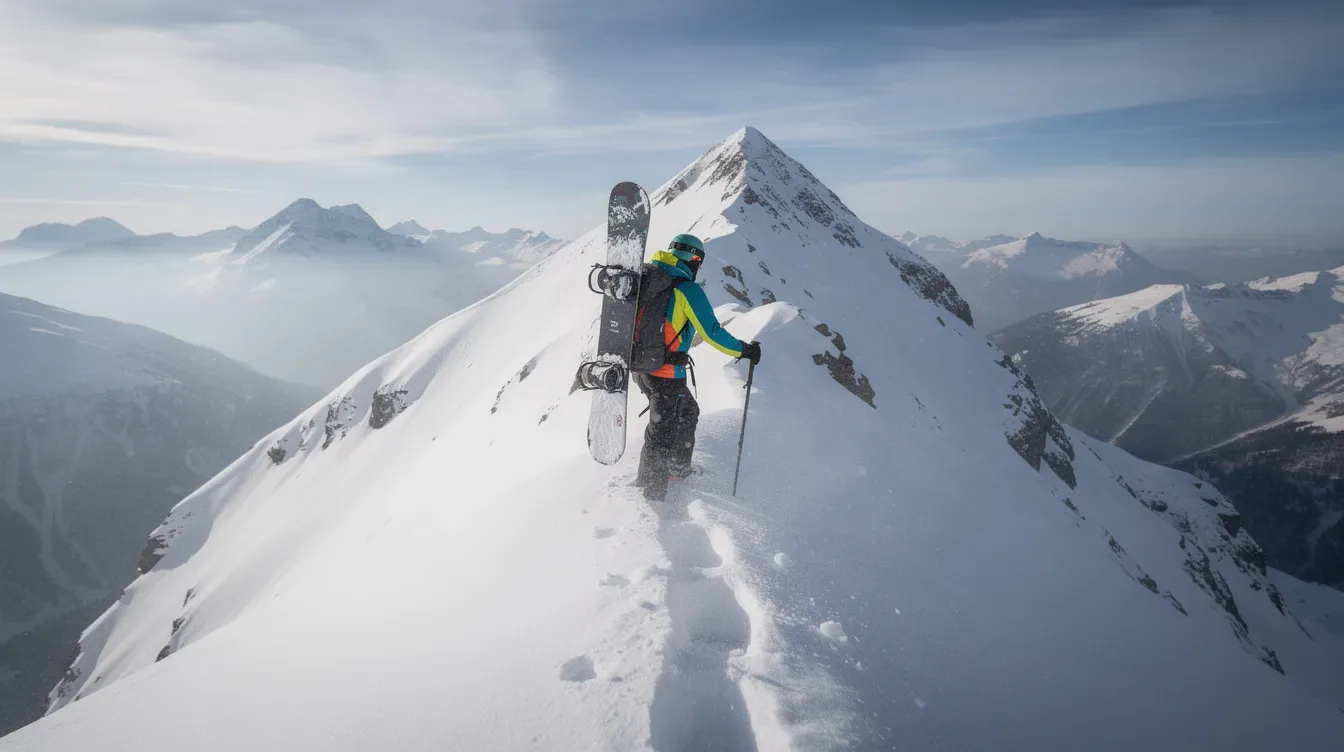
Splitboards separate into two skis for the ascent and then reassemble into a board for the descent. Perfect for backcountry hiking, they benefit in 2026 from lightweight cores and carbon reinforcements for an optimal experience both uphill and downhill.
Adapting Your Board to Your Level: Beginner, Intermediate, Expert
Actual skill level matters more than the number of years of practice. A rider with five winters can remain intermediate if they only ride a handful of days per season.
Beginners
A board for beginners should have a soft flex (3–4), a tolerant rocker or hybrid profile, and a twin or directional twin shape. Extruded base to limit maintenance and cost. Slightly shorter length to facilitate maneuvers. Renting a board in-store before buying is recommended to test different configurations.
Intermediate
Medium flex (4–6), hybrid camber/rocker profile, versatile sidecut. The goal: to progress confidently on the slopes, starting to explore the park or powder. An all-mountain board is versatile for different types of riding at this stage.
Advanced / Expert
Stiffer flex (6–8+), more pronounced camber, directional shapes dedicated to freeride or carving depending on preferences. Sintered base, carbon-reinforced core, sandwich construction for maximum performance in demanding conditions.
For a durable purchase, it’s better to choose a board that accompanies progression—neither too basic nor too demanding—especially for those who ride several weeks each winter.
Snowboards for Women: Real Differences or Marketing?
Boards labeled "women's" take into account, on average, a lighter weight, smaller boot size, and a different center of gravity. They are not just "pink" products: the adjustments are real.
These boards generally feature a softer flex, a narrower waist width, and sometimes a setback or sidecut line adapted. The range of available models covers shorter sizes, which corresponds to the average female morphology.
In 2026, the offering of women’s boards covers the entire spectrum: park, all-mountain, freeride, powder, splitboard. Brands like Burton, Salomon, or K2 offer complete dedicated ranges, but many advanced female riders also appreciate unisex models in shorter or softer versions, especially for freeride or powder.
The most reliable advice: rely first on weight, riding style, and boot width rather than the marketing label of female/male.
Snowboards for Kids and Teens
Young riders evolve quickly, and a poorly chosen board can discourage them or limit their progression. Snowboards for kids are lightweight and easy to maneuver, which is essential at this age.
Flexibility is crucial: a tolerant flex makes low-speed turns easier and reduces fatigue. An anti-catch profile (soft rocker or hybrid) avoids harsh edge mistakes that lead to discouraging falls.
Width must be adapted to small boots: no shoes that excessively protrude, but also not a board that is too wide, making it impossible to engage the edge for a lightweight child.
Simple size guideline for children:
- Toddlers: board between chin and nose.
- Teens: between chest and nose, adjusted according to weight and confidence on snow.
Brands like Nitro, Burton, or Head offer models specifically designed for young riders, with limited quantities in certain sizes—be sure to check stock at the beginning of the season.
How to Choose the Right Size Snowboard
In 2026, size is no longer just about "the board reaches between the chin and the nose." The size of the board primarily depends on the weight and height of the user, with weight being the priority factor.
Modern Rule
Refer first to the manufacturer's weight chart, then adjust:
- Freestyle / progression: 2–3 cm shorter than the standard recommendation.
- Freeride / powder: 2–5 cm longer for float and stability.
The length of a board depends on the rider's weight: it’s the mass that determines how the board flexes on the snow.
Numerical Example
For a rider who is 175 cm tall and weighs 70 kg:
| Target Style | Approximate Length |
|---|---|
| Park / freestyle | 155–158 cm |
| All-mountain | 158–162 cm |
| Freeride / powder | 162–167 cm |
Waist Width and Wide Version
The width of the board should correspond to the user's boot size. For feet sized 44–45 (US 10.5–11) and above, a wide version is recommended to avoid toe drag or heel drag—when the toe or heel of the boot touches the snow in a tilted turn.
Aim for a slight overhang of the boots on the edges (about 1–2 cm on each side) for better leverage without catching the snow in a pronounced curve.
Playground: Choosing Your Board Based on Where You Ride
The actual mountain—alpine resorts, Laurentians, Southern Alps, Pyrenees, Swiss Alps—often dictates the ideal type of board. Here’s how to guide your choice based on the conditions you encounter most often.
- Groomed runs and family resorts: all-mountain boards with medium flex, hybrid profile, intermediate sidecut. Comfort and versatility for family or friend adventures.
- Park, modules, and urban: twin boards, shorter, with impact-resistant bases and soft flex for pressing and landing in jibbing. This is the realm of pure freestyle.
- Powder and off-piste: directional boards, volume shifted, or freeride with elongated noses, pronounced setbacks, and rocker in the tip. Head to the backcountry to fully enjoy.
- Mixed mountain (groomed day, powder day, a bit of park): true modern all-mountain boards designed for all-terrain shine here. A single board-binding-boot setup can cover almost all your outings.
Bindings, Boots, and Compatibility with Your Board
The snowboard only performs well if the bindings and boots are suitable and compatible. An imbalance in this setup ruins the performance of any snowboard.
Mounting Standards
Snowboard bindings are often compatible with 2×4 and 4×4, the two most common mounting patterns. Some manufacturers use channel systems, which may limit binding choices. Always check compatibility before purchasing.
Flex of Bindings and Boots
The choice of flex for bindings and boots should follow the same logic as that of the board:
- Soft for freestyle and beginners.
- Medium for all-mountain.
- Stiff for freeride and carving.
Brands like Salomon, Burton, K2, or Head offer ranges of bindings and boots covering all levels. Accessories like Oakley goggles or protective gear complement the setup but do not influence the choice of the board itself.
Always check the manufacturer’s guide for mounting and tightening. And set the angle and stance correctly to avoid knee pain and poor posture—this is a point that many riders overlook, without exception.
Essential Adjustments: Stance, Angles, and Position on the Board
Even the best board will feel uncomfortable if the adjustments are wrong, especially during the first days of the season.
Stance Width
About shoulder width, or slightly wider. Freestyle riders may widen a bit for stability in landings, while freeride riders sometimes tighten for more precision in turns.
Typical Starting Angles
| Style | Front Foot | Back Foot |
|---|---|---|
| All-mountain | +15° | −6° |
| Freestyle | +12° | −12° |
| Carving / freeride piste | +18° to +21° | 0° to +6° |
Setback
The setback (moving the bindings towards the tail) improves float in powder. For a big snow day, moving the bindings back by 1–2 cm from the centered position can transform the experience.
Note your settings once found. It may seem trivial, but finding your reference points after a change of bindings or board saves valuable time.
Maintenance, Waxing, and Storage for a High-Performing Board
Even a high-end board loses glide and grip without proper maintenance, especially at the end of a cold day when the base struggles to heat up and maintain its performance.
Basic Actions
- Drying after each outing (to avoid rust on the edges).
- Light sharpening of the edges as needed, or treatment at a specialized shop.
- Regular cleaning of the base before waxing.
Waxing
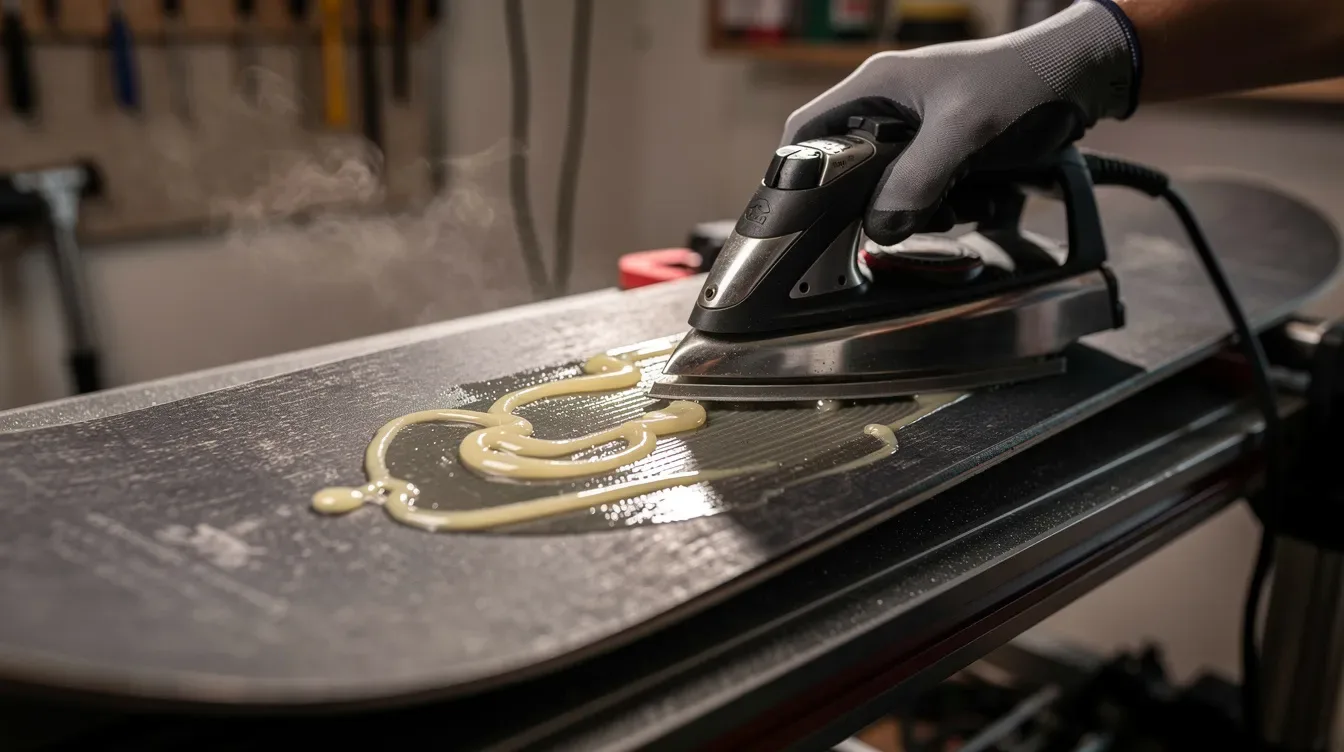
- Hot waxing (with an iron): deep penetration of the wax, lasting results. Once every 3–5 outings for a regular rider.
- Quick waxing with liquid wax: a stopgap solution between full waxings. Sufficient for a casual rider.
Off-Season Storage
Store your board in a dry place, away from sunlight and heat sources. Apply a layer of hot wax to the base without scraping it, to protect the P-tex until the next winter. Slightly loosen the binding screws to relieve stress on the inserts.
At the beginning and end of the season, check the inserts, screws, and absence of delamination—a board starting to delaminate in the sandwich must be repaired or replaced.
Budget, Price Range, and Durability of a Snowboard
In 2026, the typical price ranges for a board alone (excluding bindings and boots) are as follows:
| Range | Approximate Price | Features |
|---|---|---|
| Entry-level | $250–400 | Poplar core, extruded base, simple profile |
| Mid-range | $400–650 | Composite core, sintered base, hybrid profile |
| High-end | $650–900 $+ | Carbon reinforcements, graphite sintered base, advanced sandwich construction |
What changes with price: the quality of the core, the type of base, the finesse of the profile, and the overall durability of the construction. Some high-end models offer financing in installments—check online or in-store payment options.
For a regular rider (20–30 days per season), a good all-mountain board can last 4 to 6 seasons with proper maintenance. In the park, intensive use on rails and modules reduces lifespan to 2–4 seasons. Results vary depending on care given to the base and edges.
It’s better to have a well-chosen mid-range board with regular maintenance than a high-end model poorly suited to the rider's level. Buying used is also an option in 2026: check the base (not too damaged), edges (not warped, no cracks), and absence of visible delamination. Only add the board to your cart if it passes this inspection.
FAQ: Frequently Asked Questions About Snowboards
What is the average lifespan of a snowboard for a regular rider?
A rider who does 20 to 30 days per season can keep a good all-mountain board for 4 to 6 winters, provided they regularly wax and sharpen it. For intensive park use—repeated impacts on rails and modules—the lifespan can drop to 2–4 seasons, particularly at the edges and base.
Signs of advanced wear to watch for: base becoming thin and difficult to repair, edges warped or cracked, board very soft that has lost its pop and stability. When you notice several of these symptoms, it’s time to check your favorite manufacturer’s product page.
Can I use the same snowboard for park, groomed runs, and powder?
A modern all-mountain board with medium flex and hybrid profile can cover about 80% of situations: groomed runs, sidecountry, small jumps, and moderate powder. This is another example of the versatility of all-mountain boards.
However, for intensive riding in a discipline—big park or aggressive freeride—a specialized board will provide a significant gain in performance and safety. For a first purchase or a limited budget, start with a good all-mountain board before later complementing it with a dedicated second board. Bundled orders (board + bindings + boots) sometimes allow for negotiating a better price with included shipping.
Should I choose my snowboard based on my height or weight?
Weight is the priority criterion for the length and flex of the board, as it conditions how the board flexes on the snow. Height mainly serves to ensure that the board does not become unmanageable in maneuvers—too long for small riders, too short for larger builds.
Follow the weight charts provided by manufacturers, then adjust slightly according to riding style: shorter for freestyle, longer for freeride. Online shop filters allow you to refine the search by weight, height, and style.
Does a more expensive board automatically make me ride better?
A higher price often means better materials and more precise behavior, but it does not automatically improve the rider's technique. A board that is too demanding can, on the contrary, hinder the progression of a beginner or intermediate rider—that's the exception that proves the rule.
Prioritize suitability to level, weight, and riding style, then choose the best quality possible in that category. Read reviews and ratings given by other riders on specialized sites to form an informed opinion. With this information, your store expedition or credit card will be better invested.
When should I consider a wide board?
Generally, riders with a European shoe size of 44 and above (US 10.5–11+) should seriously consider wide boards. Boots that protrude too much from the board can catch the snow in a tilted turn and cause falls—that’s the infamous toe drag or heel drag.
Check the waist width indicated on the technical sheet and aim for a board that allows the feet to protrude about 1–2 cm on each side, not more. Depending on your shoe size and the shape of your boots, some standard boards may still fit—measure before ordering.