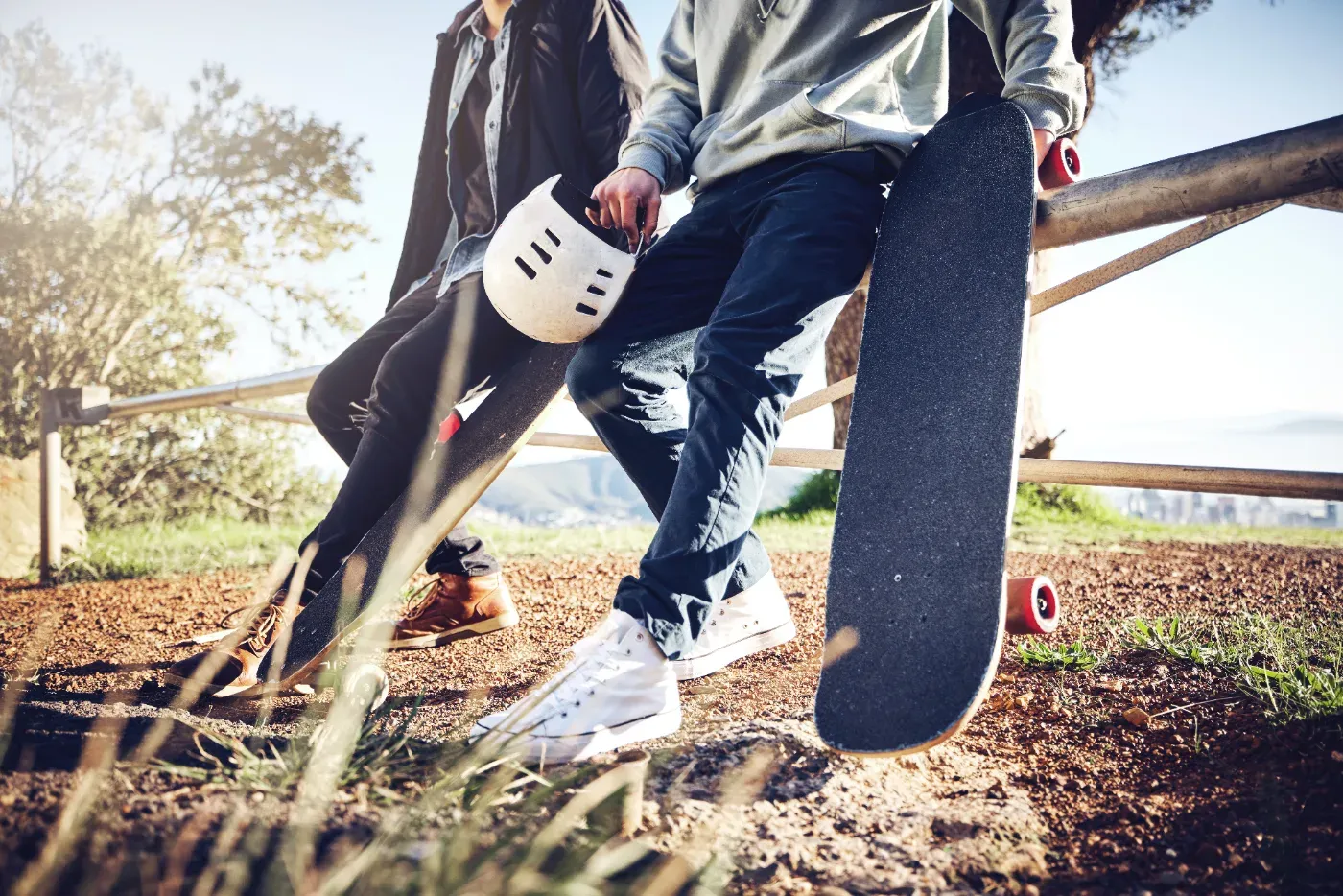
The question is not whether you will fall, but how often and onto what. In skateboarding, falling is part of learning — a beginner working on an ollie falls several times a session. Gear does not prevent the fall: it keeps the fall from costing you anything.
The helmet: the only genuinely non-negotiable piece
The other pieces prevent injuries that heal. The helmet prevents the ones that do not.
A skate helmet differs from a bike helmet on one point: it is built to absorb multiple impacts at low speed, where a bike helmet is optimized for a single impact at high speed. In practice many helmets are certified for both — it is printed on the inside label.
Check the size. Measure your head circumference with a tape, just above the eyebrows and ears. Compare it to the maker's chart: sizes vary between brands, and a helmet that is too big does not protect.
Check the fit. Once on with the strap done up, the helmet should not move when you shake your head. It should sit level, the front edge about two fingers above your eyebrows — not tipped back, which leaves the forehead exposed.
When to replace it. After any serious impact, even if it looks intact: the foam compresses once and does not come back.
Wrist guards: the most underrated piece
The universal reflex when falling is to put your hands out. In skateboarding that is the leading cause of fractures — the wrist takes your whole body weight with the arm locked straight.
A wrist guard has a rigid splint on the palm side that prevents hyperextension and spreads the impact into the forearm. It is an inexpensive piece that prevents six weeks in a cast.
If you buy one thing after the helmet, buy these.
Knee and elbow pads
These are what change your rate of learning. With knee pads, a beginner can drop to their knees to bail out of a situation instead of fighting to stay upright — and slide on the caps rather than scraping skin.
Skate pads are distinguished by a hard outer cap that slides on concrete. Soft volleyball-style pads cushion but do not slide: on asphalt, skin stops dead.
In a bowl or on a ramp, knee pads are not a comfort but a technique in their own right: the controlled knee slide is the normal way to exit a failed attempt.
Shoes matter too
Not protective gear in the strict sense, but the wrong shoe causes avoidable falls. A running shoe has a thick, curved and often slick sole: it slips off the grip and kills all feel for the board.
A skate shoe has a flat sole and sticky vulcanized rubber. You feel the difference in the first session.
What to buy, in order
- Helmet — right size, properly fitted.
- Wrist guards — the most common fracture, the cheapest protection.
- Knee pads — they speed up learning as much as they protect.
- Flat shoes — before changing anything on the board.
- Elbow pads — useful on ramps and in bowls.
What about peer pressure?
Plenty of teenagers take the helmet off on arriving at the park. It is a real issue, and habit settles it better than lecturing: a helmet worn from the very first session stops being up for discussion. In many Quebec municipal skateparks, helmets are in fact mandatory and posted at the entrance.