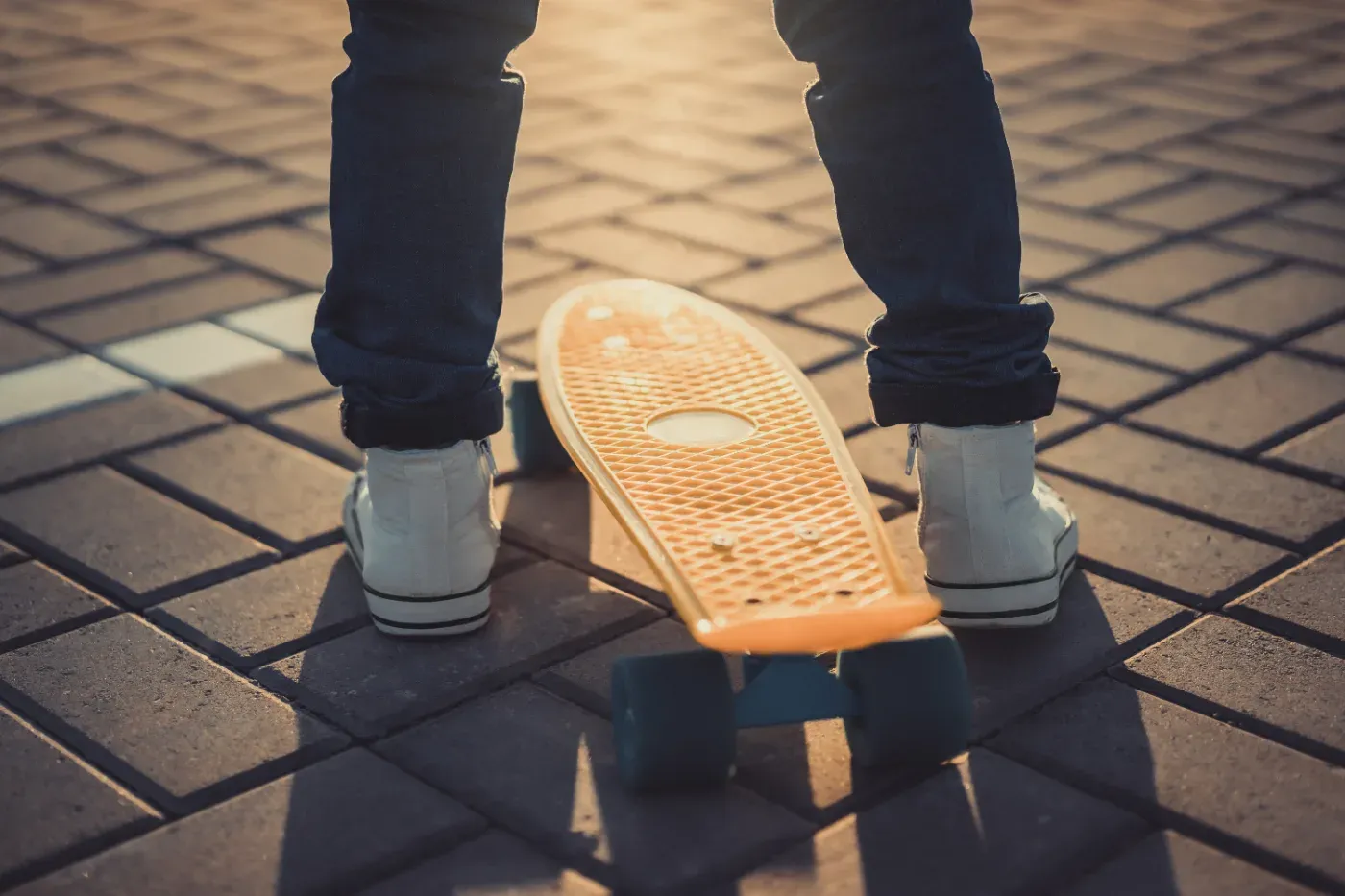
Walking into a skatepark for the first time is intimidating, and not because of the concrete. Everyone seems to know when to go, where to stand, when to stop — and nobody explains anything. Those rules do exist, they are simple, and knowing them is enough to go from intruder to regular.
The three main kinds of park
The park (or bowl). Curves, transitions, sometimes an actual concrete pool. You ride it continuously, without stopping, linking wall to wall. The lines are long and fast: this is where a placement mistake is most dangerous.
The street plaza. Features that mimic street furniture — rails, stairs, benches, ledges. You work one trick at a time, on one obstacle, with frequent stops.
The mixed park. Most municipal parks: a few street features and a small transition. Often the best place to start.
In our directory, Quebec's 345 skateparks are spread across every region, from Montérégie (54) to Montréal (41) and the Laurentians (40). Only three are indoor — a detail that matters between November and April.
The golden rule: one line at a time
This is the one truly universal rule. In any given section, one person rides, the others wait.
How do you know it is your turn? By watching for a few minutes before you ride. There is no formal queue: people go in turn, in an order that forms naturally. Note who just went, slot in after them.
If two people drop in at once, the one already moving has priority. The one starting from a standstill stops.
Where to stand — and where not to
Never on the flat in the middle of the park. That is where every line passes.
Never at the base of an obstacle someone is working on: the board usually shoots that way.
Never on the edge of a bowl with your feet hanging over unless you intend to drop in. That spot, the coping, is where other people start.
Stand off to the side, out of the lines, with a view of the whole park.
The four things that annoy everyone
Snaking. Going when someone else is already riding. It is the number one offence, and it is dangerous as well as rude.
Leaving your board lying around. An abandoned board in the middle of a park is a trap. Pick it up, even for a thirty-second break.
Sitting on an obstacle. Benches, ledges and stairs in a plaza are obstacles, not furniture.
Hogging a feature. Working a trick is normal. Monopolizing the park's only rail for forty minutes is not.
Not rules, but they help
Say hello. A nod on arrival is enough. Skateparks are far more welcoming places than their reputation suggests.
Pick your board up after a fall. Quickly, to clear the line.
Cheer. Tapping your tail on the ground is how you applaud. You will hear it after a good trick — including for a beginner who finally lands something.
When to go as a beginner
Parks are quiet on weekday mornings and early afternoons, packed after school and on weekends. For your first sessions, aim for the quiet hours: you will have room to try without an audience, and you will learn the park's lines in peace.
If your park is lit — about thirty of the ones we list are — weekday evenings are often a good compromise.