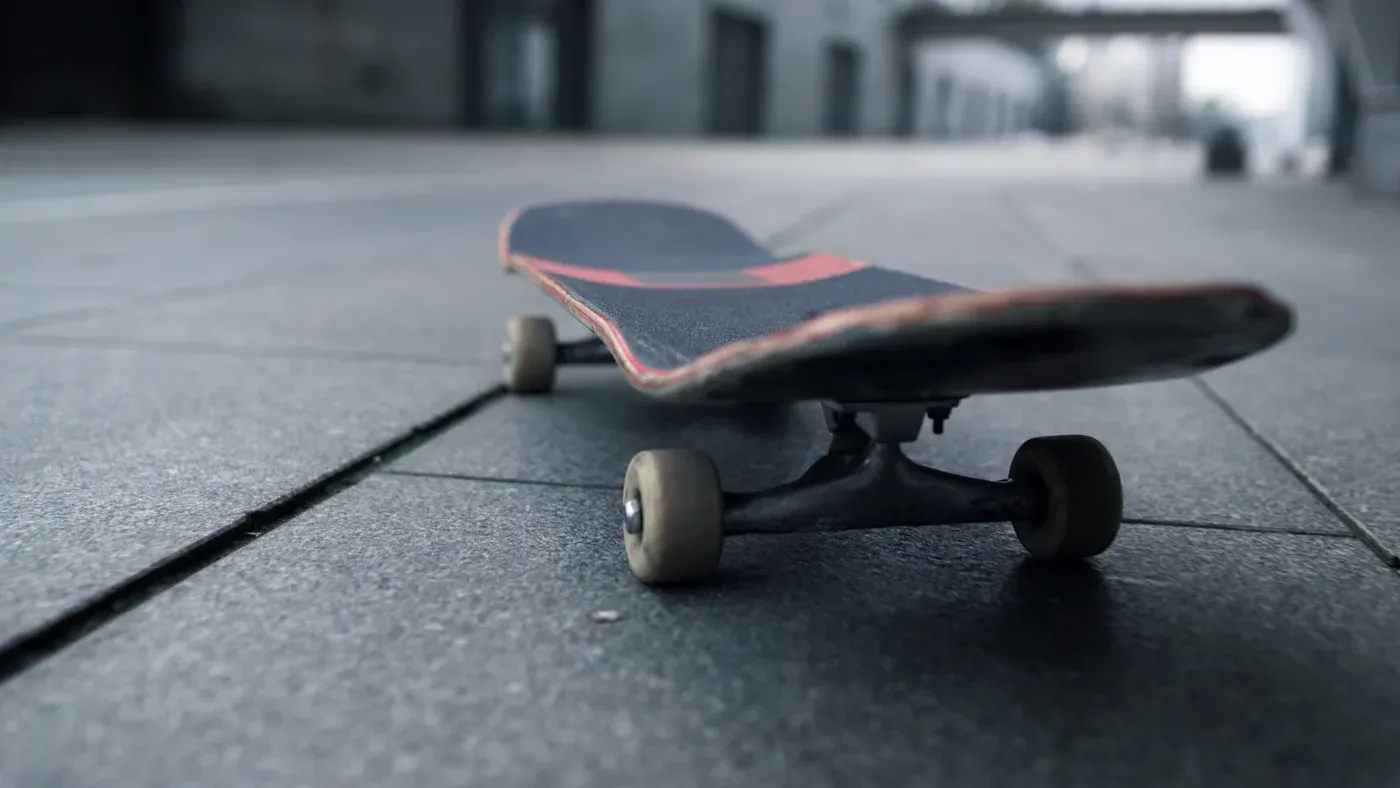
Skateboarding holds a place it has not held in a long time. You see it at the Olympics, in municipal budgets and in the parks — where the average age is no longer what it was twenty years ago. Let us describe what is happening using only what can actually be verified.
Skateboarding became an Olympic sport
This is the most structural fact. Skateboarding entered the Olympic programme at the Tokyo Games — held in 2021 — and returned in Paris in 2024.
That recognition changes two things. First, how institutions see it: an Olympic sport gets budgets, federations and programmes that a "youth activity" does not. Second, how parents see it, for whom skating becomes a sport among others rather than something to discourage.
What our directory shows
We list 345 published skateparks in Quebec, spread across every administrative region. That is not nothing: it means a large share of mid-sized municipalities has at least one feature.
The distribution is telling. Montérégie leads with 54 parks, ahead of Montréal (41) and the Laurentians (40). In other words, most of the supply is outside the urban core — driven by municipalities that built a neighbourhood park.
We do not hold historical data that would let us say how many were built in recent years, and we will not invent it. But the scale of the current network speaks for itself.
A practice that is no longer only teenage
This is what every regular sees: adults in their thirties, forties and fifties in the parks, often people who skated as teenagers and have picked it back up.
The logic is simple. The generation that discovered skating in the 1990s and 2000s can now buy a board without asking permission, and has kids to bring to the park. The municipal skatepark becomes an intergenerational place — which it was not.
What still holds it back, concretely
Winter. This is obstacle number one, and it is measurable: of 345 parks, three are indoor. For a practice that runs four or five months a year across much of Quebec, that is very little. The covered parks in Victoriaville, Trois-Rivières and Montréal carry the entire cold season between them.
Lighting. Only about thirty parks are recorded as lit. In a territory where night falls before 5 p.m. for part of the year, an unlit park loses its evenings.
Those are two municipal levers that are relatively cheap compared to building a park.
What we cannot claim
In the interest of honesty: we have no participation figures, no sales data, no attendance statistics for Quebec parks. Articles announcing growth percentages usually rest on American data, or on nothing at all.
What can be said comes down to three verifiable facts: skateboarding is Olympic, Quebec has 345 skateparks spread across the whole territory, and almost none of them is usable in winter.
What next?
The interesting question is not whether skating is coming back — it is here. It is whether the infrastructure will follow the practice across twelve months rather than five.
If you know of an indoor park we have not listed, tell us. With three addresses for the entire province, every one counts.