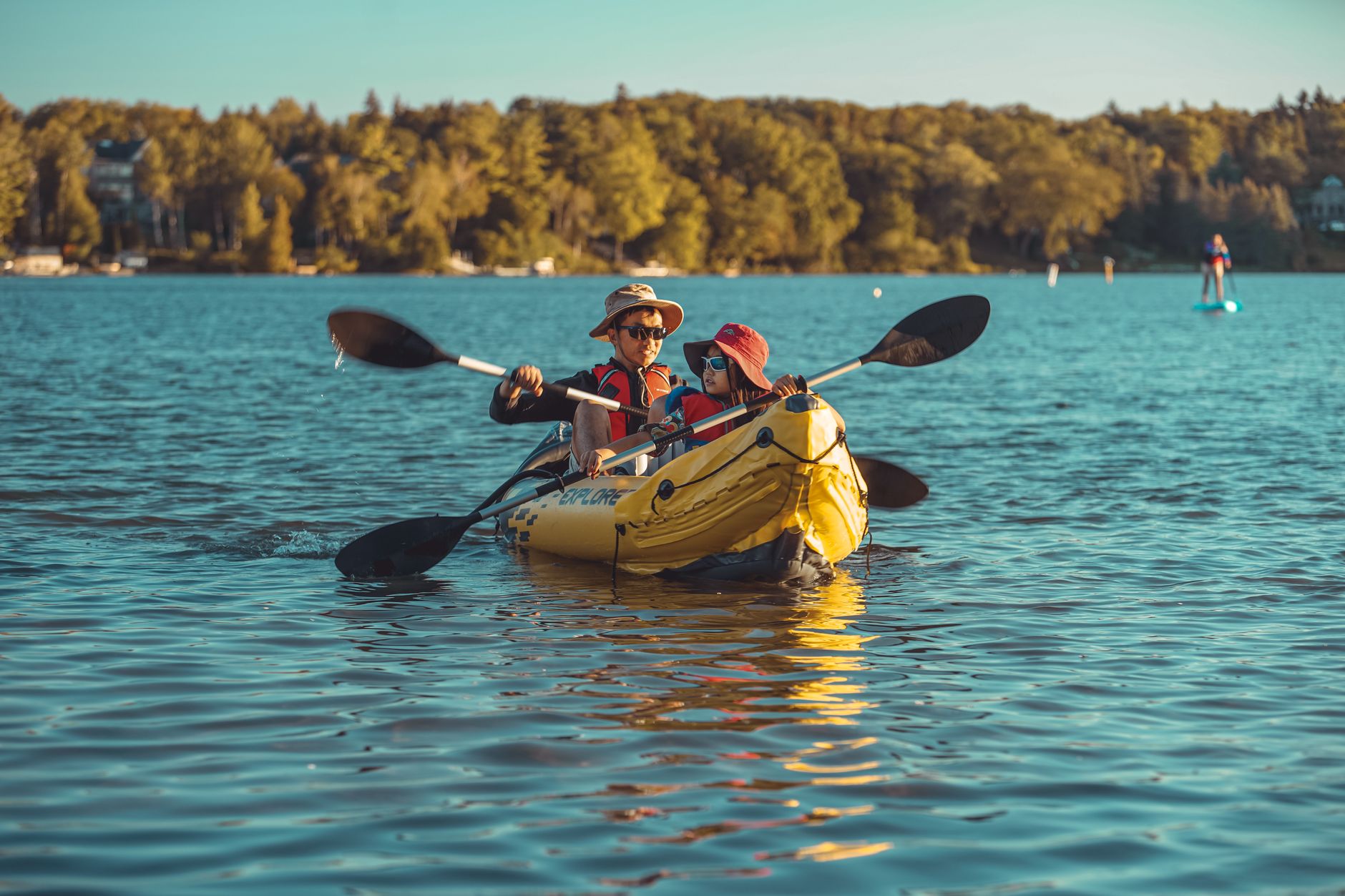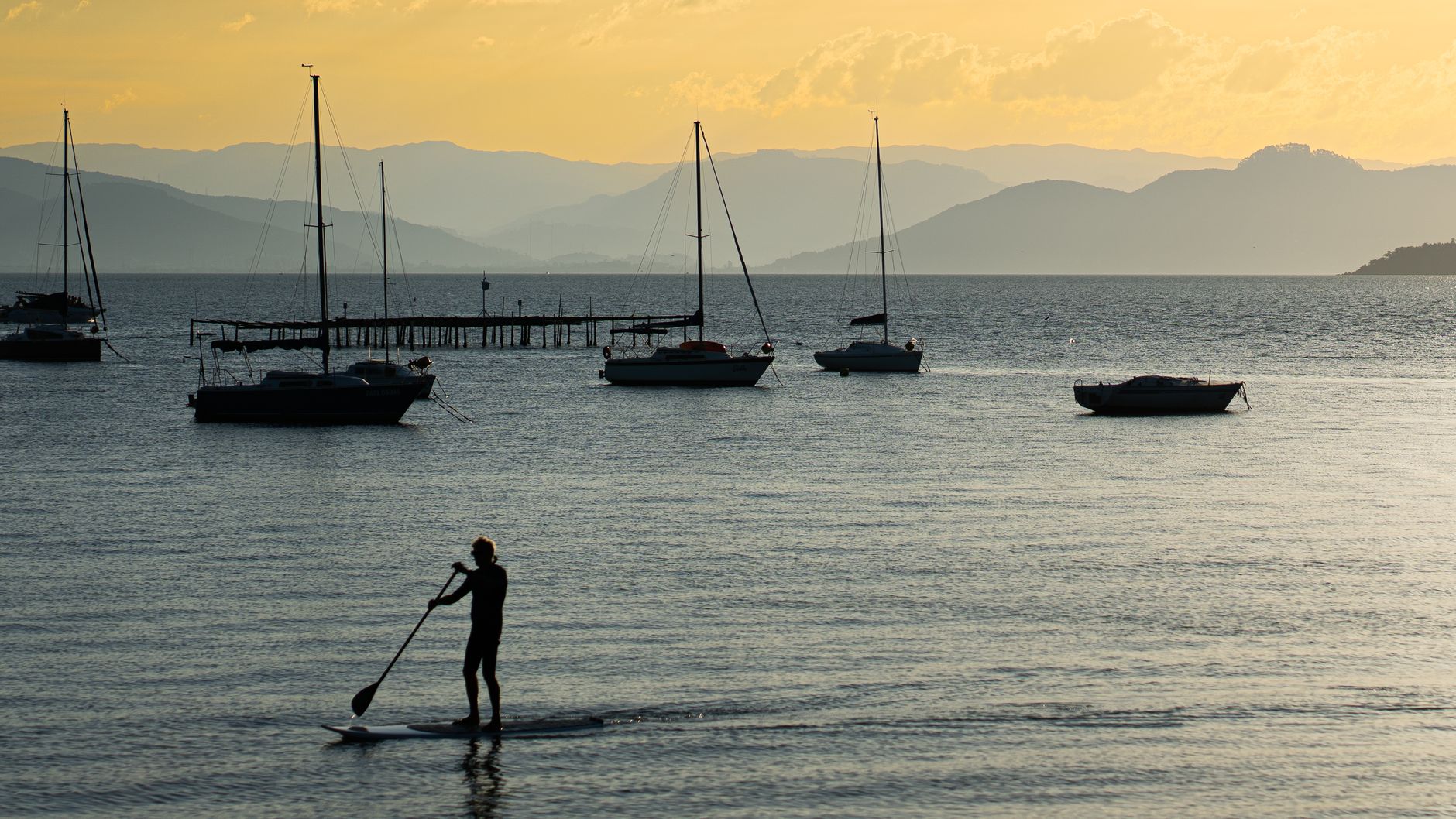
Explore everything you need to know about paddleboarding, from beginner basics to advanced techniques, all while enjoying Quebec's stunning waters.
Stand-Up Paddleboarding Guide
Stand-up paddleboarding is an increasingly popular water activity in Quebec, thanks to the beauty of its lakes, rivers, and the St. Lawrence River. Whether you are a novice or an expert, this guide will provide you with practical tips, information on equipment, paddling techniques, and safety recommendations to fully enjoy your experience on the water.
Equipment
Types of Paddleboards
Choosing the right paddleboard is crucial for your experience. Here’s a summary table of the types of paddleboards:
| Type of Paddleboard | Characteristics | Recommended Use |
|---|---|---|
| Inflatable | Lightweight, easy to transport, takes up little space | Beginners, touring, travel |
| Rigid | More stable, better performance | Racing, waves, whitewater |
| All-around | Versatile, good for all skill levels | Recreation, exploration |
| Touring | Long, often equipped with cargo holds | Long-distance paddling |
| Racing | Long and narrow, designed for speed | Competitions and races |
| Surf | Shorter and wider, better maneuverability | Surfing and waves |
| River | Sturdy, designed for rapids | Whitewater and rivers |
Paddle
The paddle is an essential element. It should be suited to your height. A general rule for choosing the right length is to select a paddle that measures about 15 to 20 cm longer than your height. Carbon paddles are lightweight and rigid, while aluminum paddles are more durable and less expensive.
Leash
A leash is essential for your safety. It connects you to your paddleboard and prevents it from drifting away in case of a fall. Choose a leash that is appropriate for the size of your board and your skill level. A 10-foot leash is generally recommended for calm waters, while a 12-foot leash is better for waves and rivers.
PFD/Insulating Clothing
Wearing a PFD (personal flotation device) is mandatory in Quebec for anyone under 12 years old on the water. For adults, it is strongly recommended, especially in cold water. Additionally, insulating clothing may be necessary in the fall or spring when water temperatures are low. Neoprene suits are an excellent option for keeping warm.
Beginner Level
Getting on the Board
To get on your paddleboard, start by positioning yourself on your knees in the center, then slowly slide back until you are standing. Keep your feet shoulder-width apart for better balance.
Position
Your position is crucial for stability. Stand up straight with your knees slightly bent. Your gaze should be directed toward the horizon, not down at your feet. This will help you maintain your balance.
Basic Paddle Stroke
For the basic paddle stroke, place the paddle in the water in front of your front foot, pull it back while keeping your upper arm slightly bent. Avoid bending your wrist. Alternate sides to move in a straight line.
Simple Turns
To perform a simple turn, use the back paddle stroke. Place the paddle behind your back foot and pull back to turn in that direction. You can also use a "J" stroke for a tighter turn.
Falling and Getting Back On
It’s normal to fall. To get back on your board, swim to the side of the board, position yourself on your knees, and push yourself up with your arms. Once on the board, take a moment to regain your balance before standing up.
First Safety Reflexes
Learn to assess weather conditions and recognize signs of danger. Never go alone, especially in cold water. Inform someone of your route and expected return time.
Intermediate Level
Pivot Turn
The pivot turn is a technique for turning quickly. To execute it, shift your weight onto your back foot while placing the paddle at the front. Make a strong paddle stroke to pivot the board.
Step-Back Turn
This technique involves moving your back foot toward the tail of the board to make a tight turn. This allows you to control the board in choppier conditions.
Reading Wind and Waves
Knowing how to read conditions is essential. Wind can affect your speed and direction. Learn to use the wind to your advantage by paddling perpendicular to it to avoid drifting.
Cadence
Cadence is important for efficiency and endurance. Try to maintain a steady, moderate pace, and avoid overexerting yourself during paddle strokes.
Long-Distance Touring
For long-distance paddling, prepare accordingly. Bring enough water, food, and safety equipment. Familiarize yourself with your route and points of interest.
Expert Level
Downwind
Downwind paddling involves paddling with the wind. This can be very fast and exciting. Learn to adjust your position and technique to maximize your speed and control.
Wave/Surfing
Surfing on waves requires good balance and timing. Learn to choose the right wave and position yourself correctly to gain speed.
Whitewater River Paddling
Paddling in whitewater requires advanced skills. Familiarize yourself with currents, rapids, and navigation techniques. Practice maneuvers like ferrying and carving.
Racing
For competition, focus on improving your technique, speed, and endurance. Participate in local races to gain experience.
Expedition and Navigation
For expeditions, meticulously plan your route, considering weather conditions, tides, and exit points. Bring appropriate equipment and be prepared for the unexpected.
Safety in Quebec
Cold Water
Water temperatures in Quebec can be very low, even in summer. Always wear a PFD and appropriate gear. In case of a fall, try to stay calm and swim toward the board.
Leash Suitable for Water Type
Ensure that your leash is suitable for the type of water you are paddling in. A longer leash is preferable for waves, while a shorter leash is adequate for calm waters.
Weather and Wind
Before heading out, check the weather forecast. Avoid paddling in stormy weather or with strong winds. Be aware of changing conditions.
Exit Plan
Establish an exit plan before you leave. Inform someone of your route and expected return time. Have a means of communication in case of emergency.
Where to Paddle in Quebec
Quebec is filled with beautiful places to practice stand-up paddleboarding. Here are some suggestions:
- Lac Saint-Jean: Ideal for touring and exploring.
- St. Lawrence River: Perfect for experienced paddlers, with waves and currents.
- Jacques-Cartier National Park: Offering breathtaking scenery and calm rivers.
- Lac Memphrémagog: A peaceful lake for beginners and touring.
- Rivière des Mille Îles: Excellent for exploration and nature discovery.
Common Mistakes
- Poor Posture: An incorrect position can hinder your balance.
- Paddle Too Short or Too Long: This can affect your technique and comfort.
- Not Preparing for Conditions: Ignoring weather or currents can be dangerous.
- Forgetting the Leash: Not wearing a leash can lead to accidents.
- Paddling Alone: It’s always better to paddle in pairs or groups for safety reasons.
Progression and Checklist by Level
Beginner
- Get on the board
- Correct position
- Basic paddle stroke
- Simple turns
- Safety techniques
Intermediate
- Master the pivot turn
- Practice the step-back turn
- Read wind and waves
- Improve cadence
- Plan long-distance tours
Expert
- Practice downwind paddling
- Learn to surf waves
- Navigate in whitewater
- Participate in races
- Plan expeditions
By following this guide, you will be well-equipped to fully enjoy stand-up paddleboarding, whether you are a beginner or an expert. Always prioritize your safety and that of others on the water. Happy paddling!